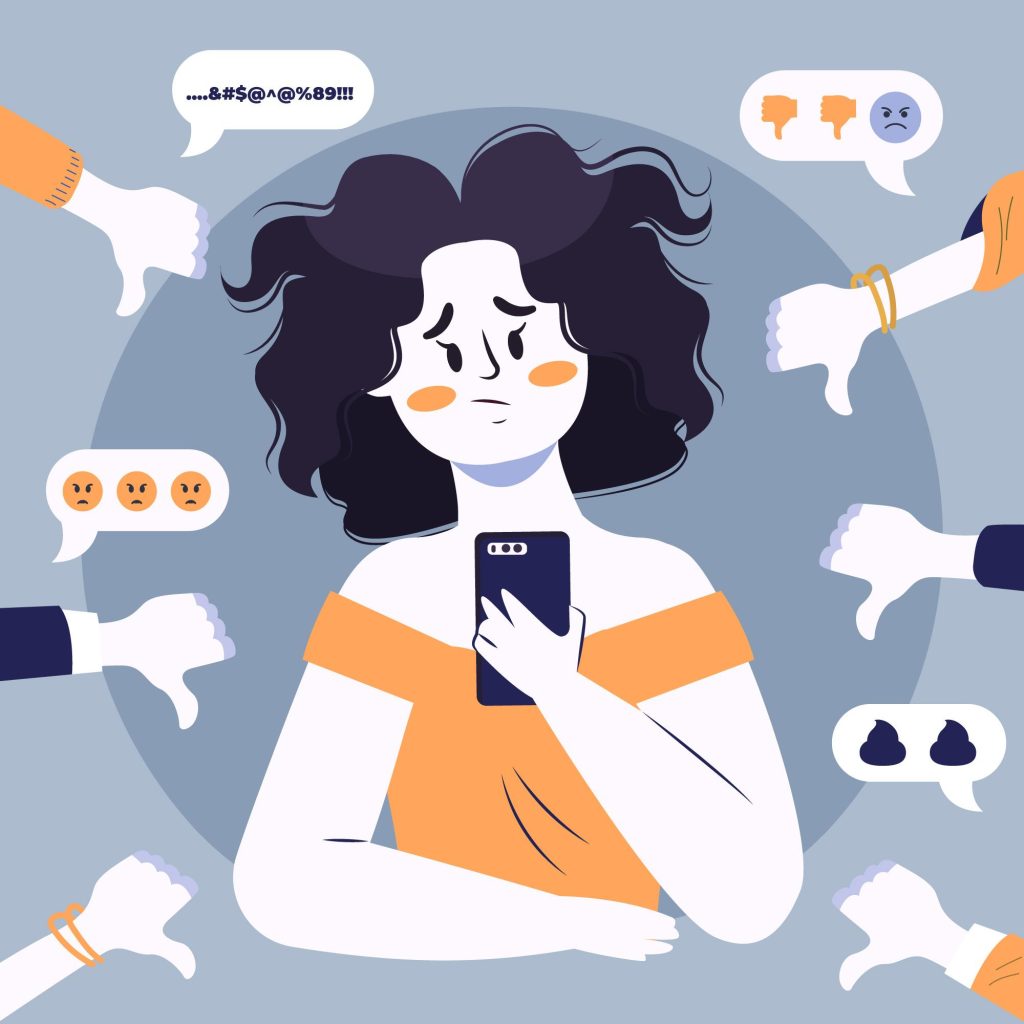
A successful Youtuber, friend of mine, told me the other day how much hate he received one of his latest football videos about F.C. Barcelona. We’ve all seen the toxic side of the internet, but it-s hard to imagine the impact this can have when one is target of so much hate. It feels massive, overwhelming, and impossible to control. I have been there. Twice. And let me tell you, it’s not fun.
A new report from the University of Cambridge reveals something unsettling: the infrastructure that fuels social breakdown and political influence is shockingly cheap to buy.
Cambridge has essentially put a price tag on online manipulation.
Their Online Trust and Safety Index (COTSI) exposes a thriving, subterranean market where you can openly purchase fake accounts, artificial popularity, and entire political influence campaigns.
Forget high-level spy craft; the core unit of this massive manipulation market is the humble mobile phone number. Every fake account needs a SIM verification, and where SIMs are cheap and regulations are lax, bad actors have a field day.
The COTSI data, gathered from providers selling accounts globally, gives a disturbing snapshot of this economy:
- SMS Verification Price Shock: The cost of an SMS verification varies wildly, showing how easy it is to operate in certain jurisdictions.
- In the UK, buying a SIM verification to create a fake account costs a mere $0.10 on average.
- In the US, it’s slightly higher at $0.26.
- In contrast, in places like Japan ($4.93) or Australia ($3.24), the process is significantly more expensive.
- In Russia, the price plummets to just $0.08.
As Dr. Jon Roozenbeek, the study’s lead, points out, this reliance on phone numbers creates a bottleneck that could be regulated, but for now, it’s a huge profit engine for those running “SIM farms”. It’s a simple logic: the cheaper the SIM, the cheaper it is to buy an army of bots.
This isn’t just about making some influencer look more (or less) popular. The market provides ready-to-sell accounts across a massive range of platforms, including X, Amazon, Tinder, Uber, and Discord. Meanwhile, platforms like Meta, Shopify, and TikTok are among the cheapest for verification.
Crucially, these accounts are becoming increasingly sophisticated. Thanks to generative AI, a well-funded bot can now execute an influence campaign through hundreds of fake accounts, writing and adapting messages that are hard to distinguish from human input.
The co-author, Anton Dek, sums up the core finding: “Disinformation has its own economy. You just have to follow the money.”.
The COTSI study didn’t just look at average prices; it tracked market dynamics, and what they found around elections is particularly concerning.
Leading up to national votes, the price of verifications on messaging apps like Telegram and WhatsApp consistently spikes. This strongly suggests a rapid increase in demand for localised influence campaigns right before a major election. Telegram, in particular, is frequently used for influence operations, especially by “state actors”.
The Way Forward: Following the Money Trail
The Cambridge team argues that since this manipulation relies on a measurable, liquid economy, it can be regulated and dismantled. The key political conclusion is clear: intervening in the SIM market could significantly reduce the profitability of the business.
Proposed fixes include:
- Better Control: Stricter control over SIM card sales.
- Traceability: Demanding better traceability in verification processes.
- Transparency: Platforms should be forced to show the true geographical origin of accounts.
As Professor Sander van der Linden, co-author, concludes, “Understanding the price of manipulation is the first step to dismantling the business model behind disinformation”.
The practical takeaway is this: A cheap, liquid market for verification facilitates everything from mass scams to sophisticated operations that distort public perception, damage brands, or amplify false narratives. If we, as a society, decide that buying public perception on the cheap is unacceptable, then following this money trail is the most direct line to stopping it.